Today
What needs you today, and nothing else
One list, worked out from your own records every time it is read. Governance, risk, compliance, incidents, suppliers, assets and operations. Each line says in one sentence what to do next.
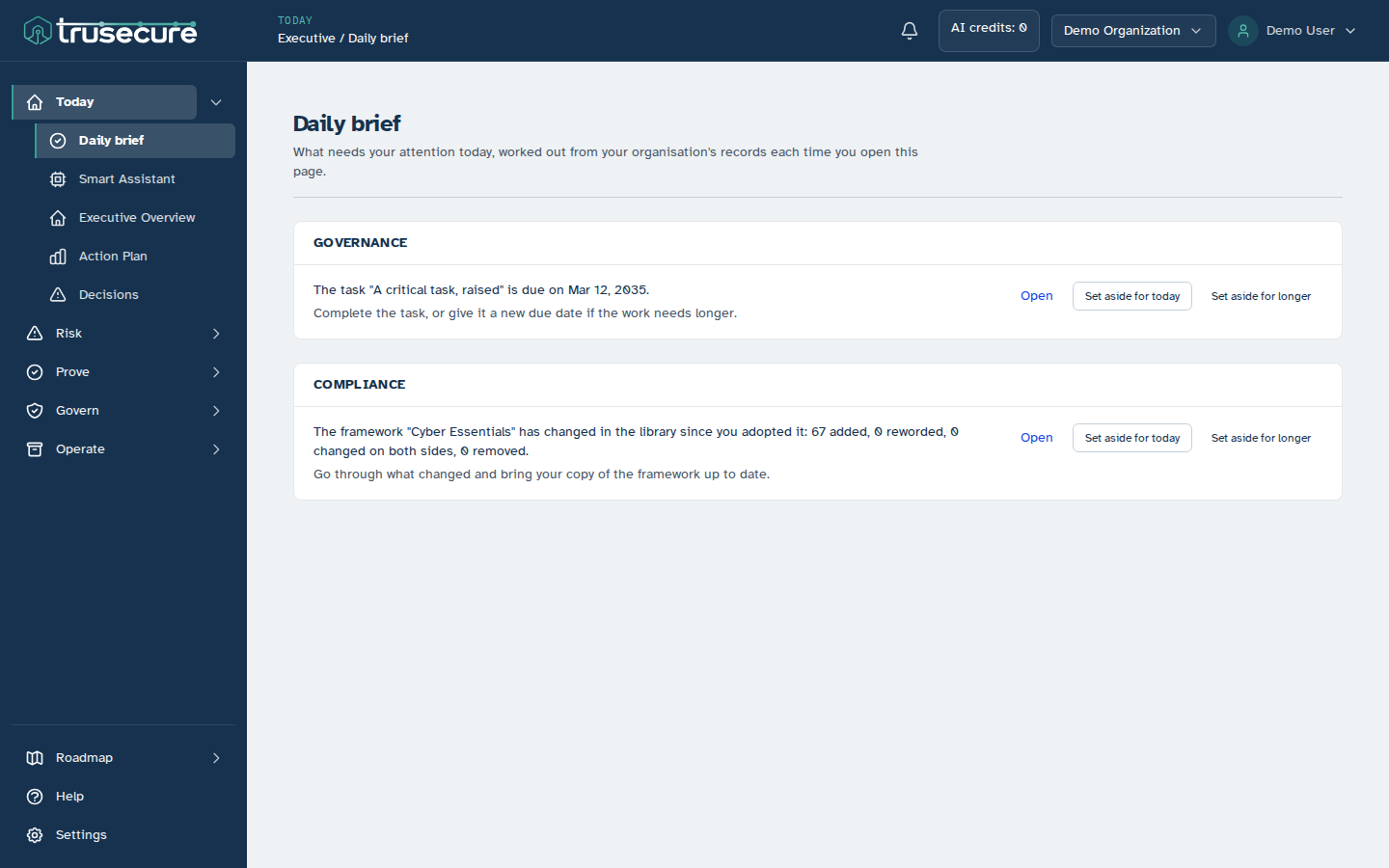
- kinds of line in the brief
10
From a policy waiting for review to a control with no evidence.
- place to decide
1
Risks above appetite, policies waiting and evidence to sign, on one board.
- number out of 100
1
Your score, its four parts and the open items that would lift it.
Monday morning
The list was somebody's judgement
Every compliance tool gives you a dashboard. The list of what to do on Monday morning was usually worked out by one person, from memory, on Friday afternoon.
- The urgent thing is in a mail, next to four newsletters.
- Two people are working on the same thing, and neither knows.
- The board pack is built the week before, by hand.
- A deadline that matters is only seen when it has passed.
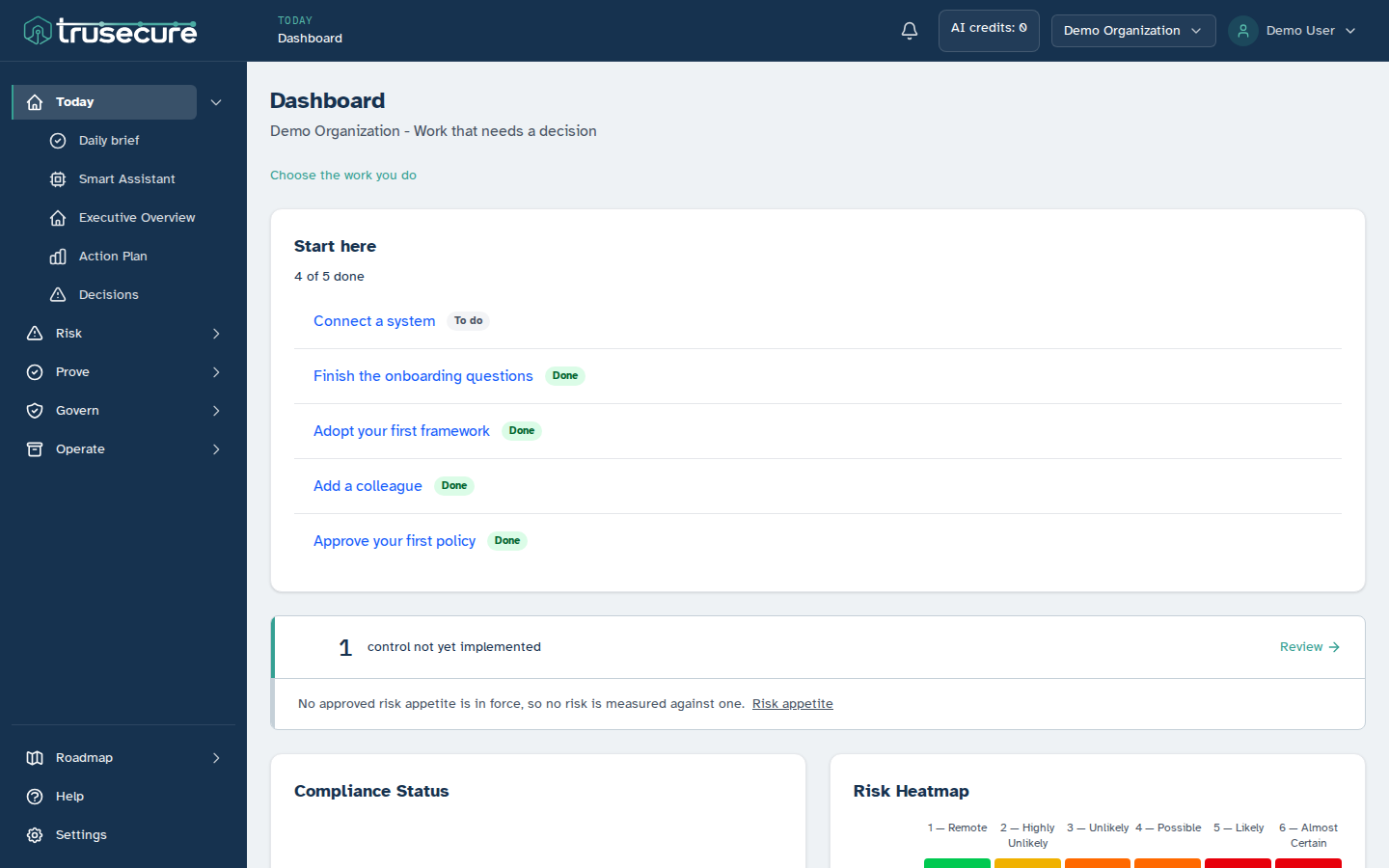
The brief
It is read from your records, every time
The brief is not a report somebody runs. It is worked out when you open it, from the records your organisation already keeps. A policy is waiting for review, so it says so. A control has no evidence and its date has passed, so it says that too. Nothing appears because a person put it there.
On the same screen
Three things that answer a different question
The brief tells you what to do. These tell you where you stand, what you may decide, and what would move the number.
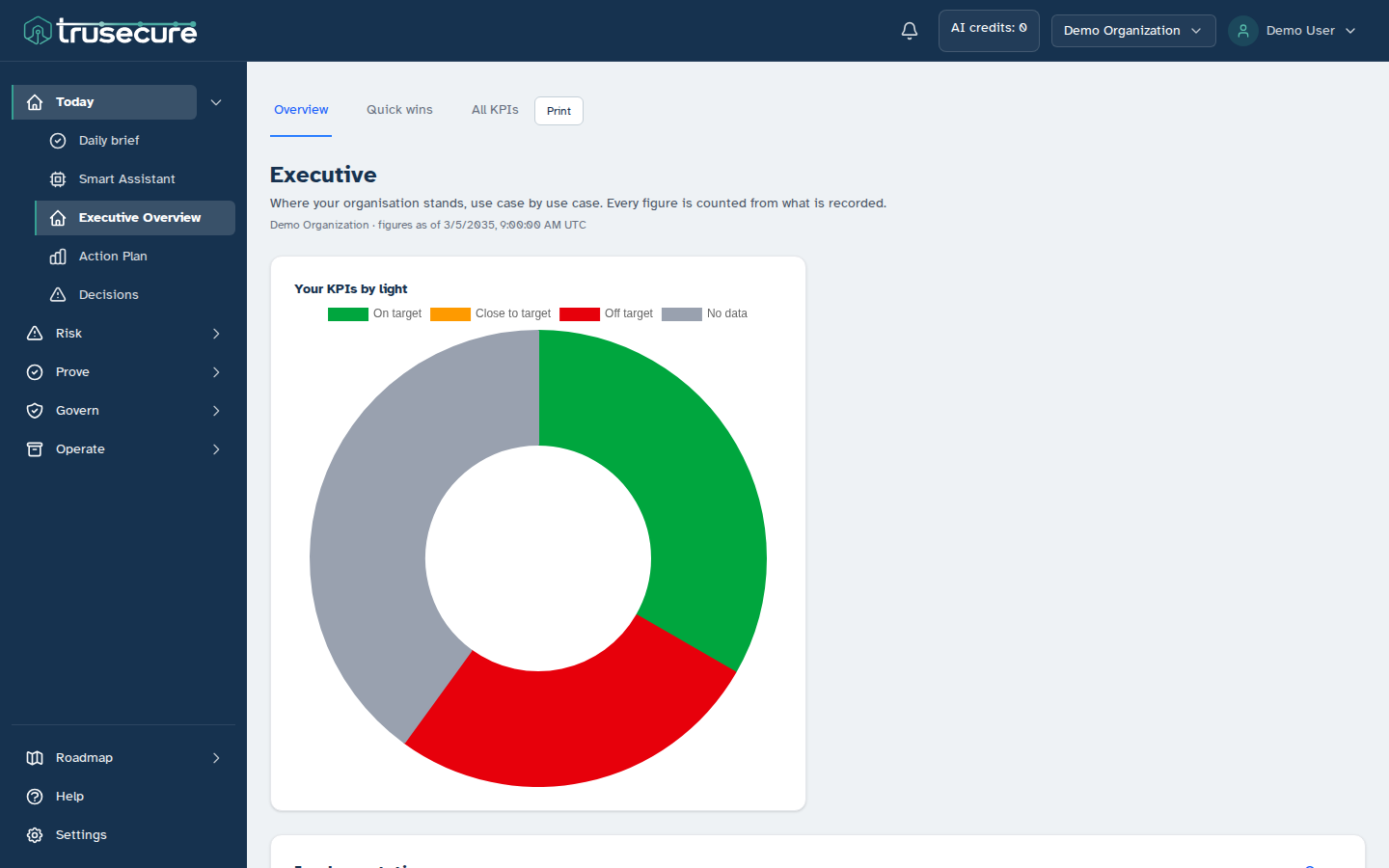
The measures
Your own measures, each with a target and a light, next to the gap report that says what would close it.
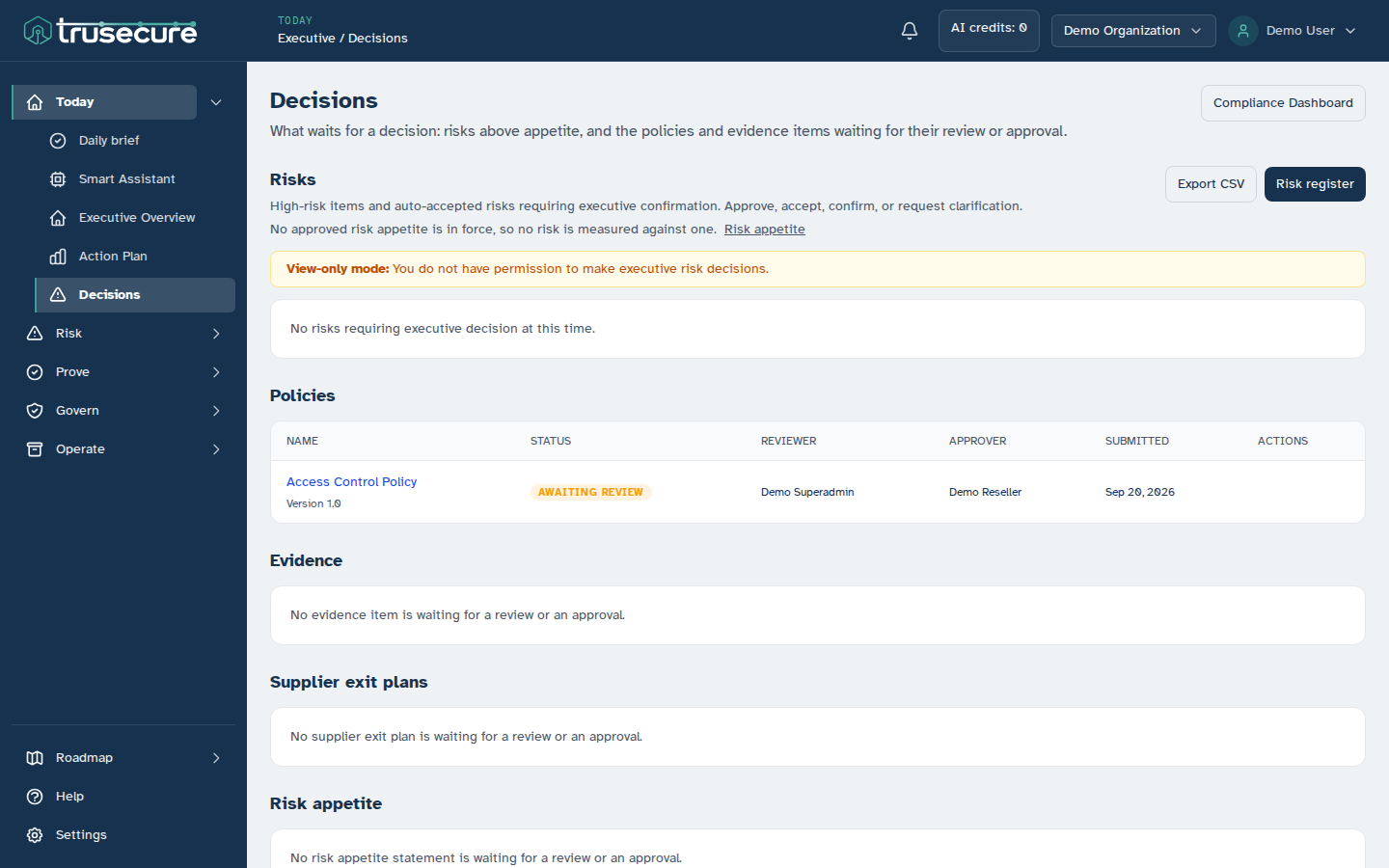
The board of decisions
Risks above appetite, policies waiting for review and evidence waiting for approval, each with the person who may decide.
The quick wins
The open items that would lift your score the most, most serious first, so the first hour of the day is not spent guessing.
On the screen
Where your organisation stands
The overview reads the record rather than a stored figure, and every number on it can be opened to the entries behind it. The gap report lists what is missing, and the quick wins list what would close it first.
How it reaches you
The rest of the morning
A list only helps if it arrives. These are the ways it does.
See the platform- A message each morning with the same list, sent at the hour your organisation chooses.
- The bell every person already has, for the things that cannot wait for the morning.
- A line on weaknesses that affect what you run, counting what is new since yesterday.
- Your work, your way: each person chooses the kind of work they do, and the first screen leads with it.
- A meeting that turns into minutes, risks and tasks, with the paperwork filed for you.
- Your colleague in the product, raising the risks that follow from what it sees, and writing the plan for each.
Questions
What a careful buyer asks
- Who decides what is on the list?
- Your records do. The list is worked out each time it is read, and every line names the thing that is waiting.
- Can I see why a line is there?
- Yes. Each line opens the record it came from, so you can check the reason yourself.
- Does everybody get the same list?
- No. Each person gets the part of it that is theirs, and the first screen leads with the work they do.
- What if a deadline is missed?
- It stays on the list until it is closed. The trail says when it was due and when it was dealt with.
Start
Start the morning with one list
Tell us what you answer to and who needs to see what. We set the brief up for your organisation, and it is on your first page from the first day.