AI in the platform
What the AI may do, and what it may never do
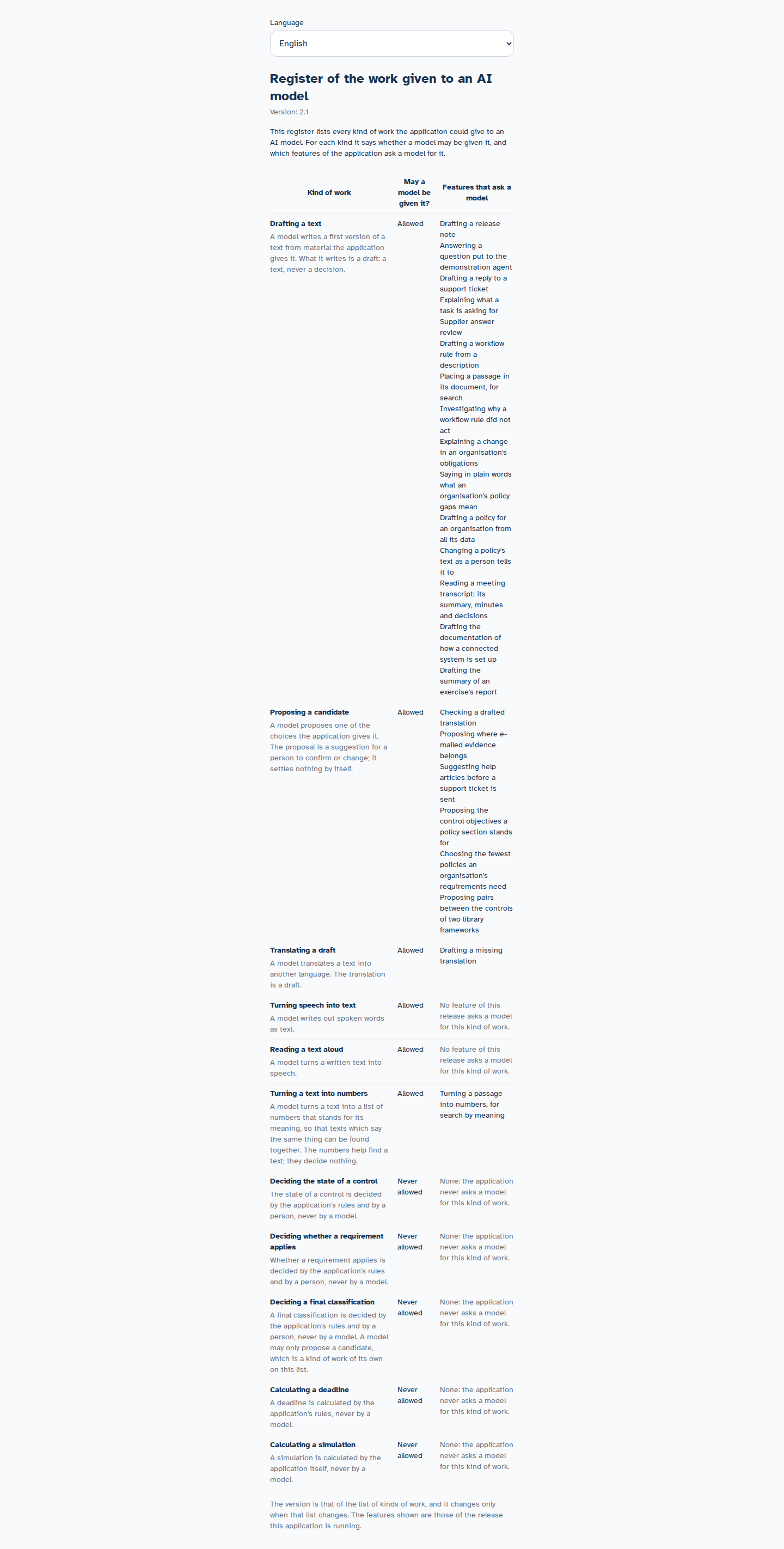
TruSecure keeps one closed list of the kinds of work a model may be given. Six are allowed, five are never, and the list is checked in two places before work reaches a model.
- kinds of work on the list
10+
The same closed list, checked at the door and in the build.
- of them a model may do
6
Drafting, proposing, translating and three more.
- of them a model never does
5
Deciding, judging and calculating are never handed over.
Your week
Nobody can say what the tool was allowed to do
The product writes your policy draft and reads your evidence. What you cannot tell is where the line sits, or who set it.
- The rule is in a file nobody has read since the first week.
- The same feature behaves differently for two businesses.
- Nobody can say what was sent to the model, or when.
How TruSecure handles it
The rules are in the product, not in a promise
The closed list is written into the product itself, and two separate checks make sure no feature can step outside it.
It may draft, and you decide
A model writes a first version of a text and suggests which control it belongs to. A person reads it and confirms it.
It never decides
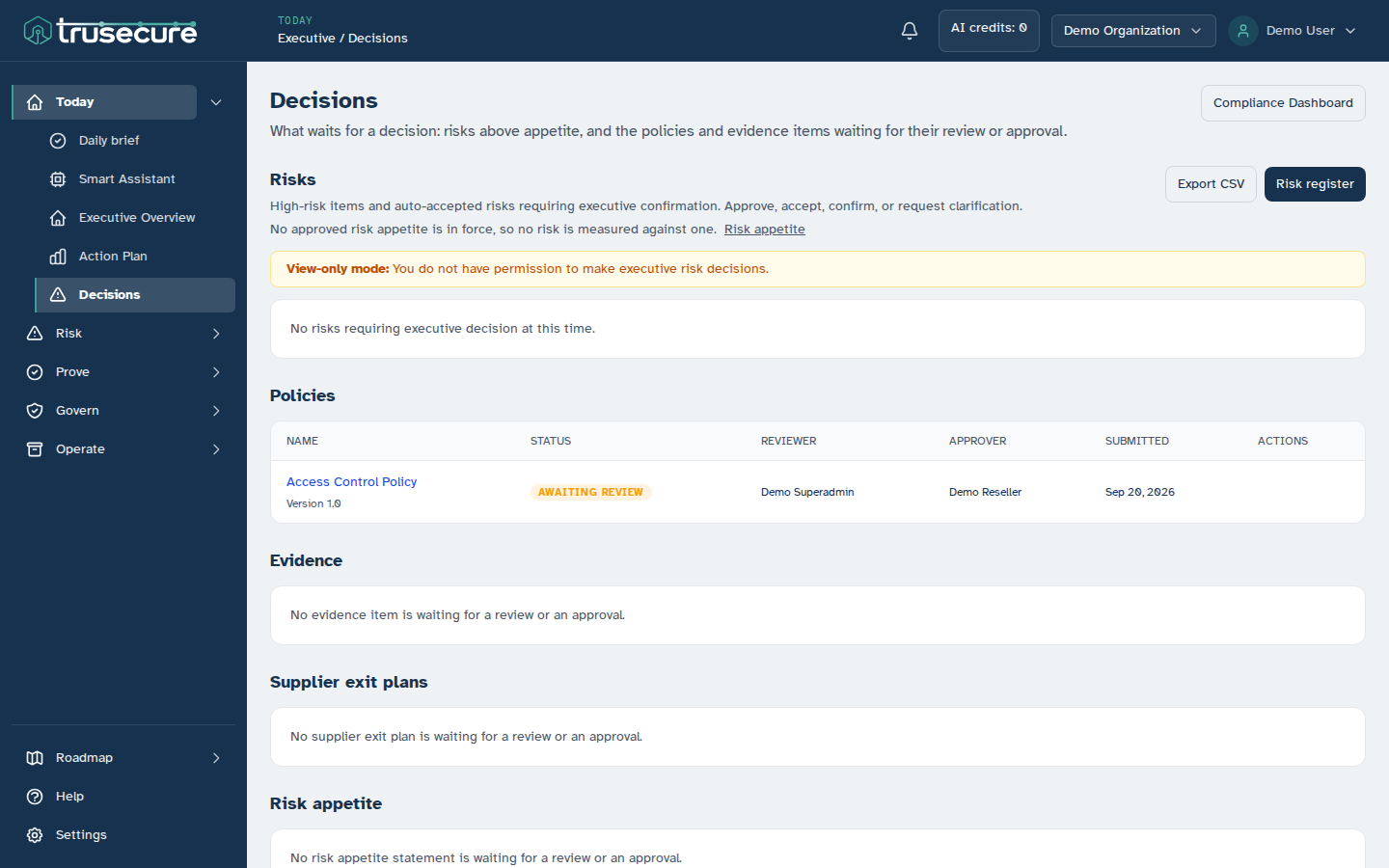
The state of a control, whether a rule applies, a final classification, a deadline and a figure all come from the product's rules and from a person.
The list is checked twice
One check refuses the work at the door before the settings are read, and a test in the build names any feature that breaks it.
Every call is on the record
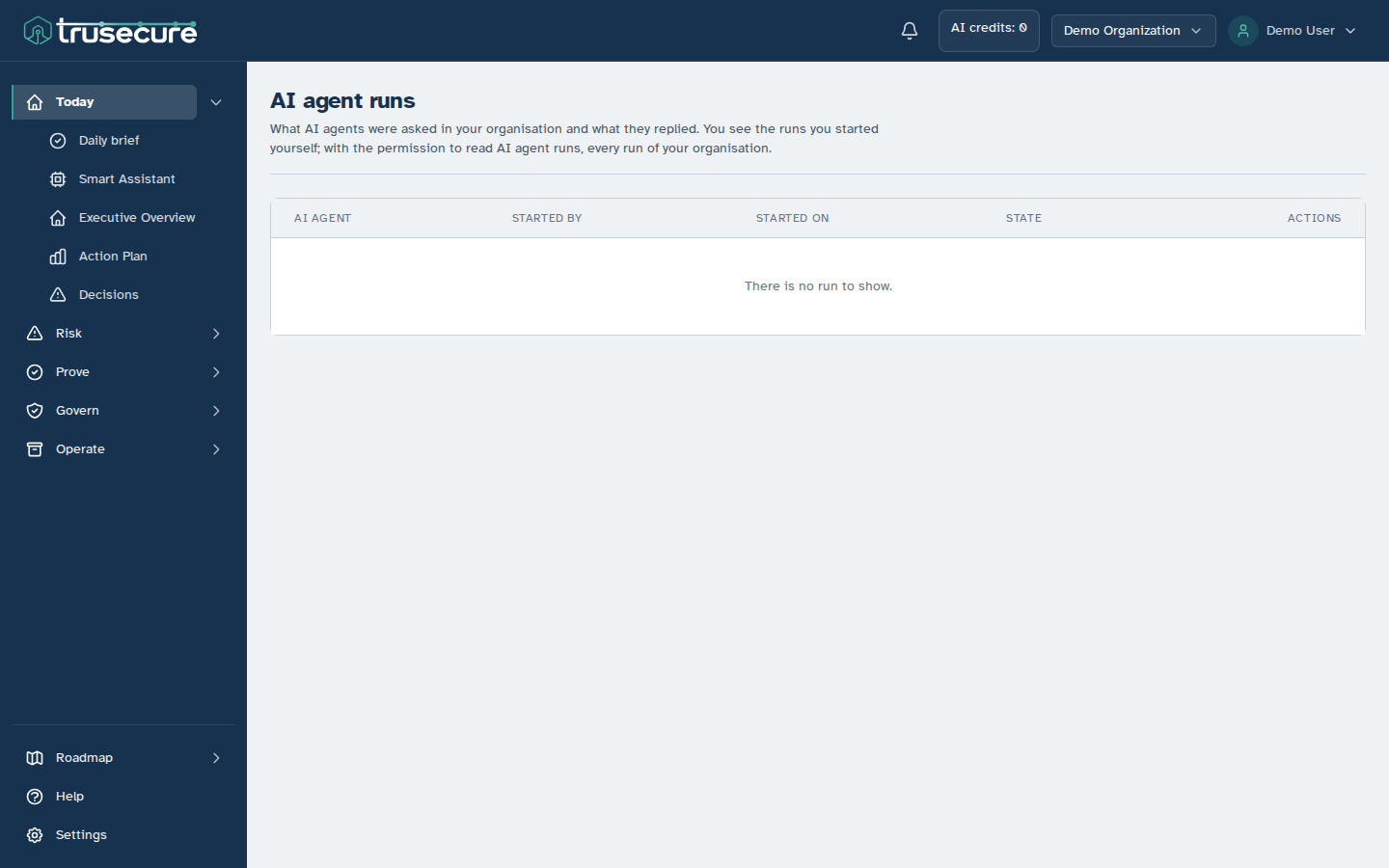
Your own page lists each call made for your organisation, with the feature, the model and what came back.
The three things you can check
What you can see for yourself
None of this asks you to take the vendor's word for it.
The list itself
The kinds of work, one row each, with the features that ask for each one. The register is published in the product.
Your own use of it
Each call made for your organisation, with the feature it came from.
The refusals
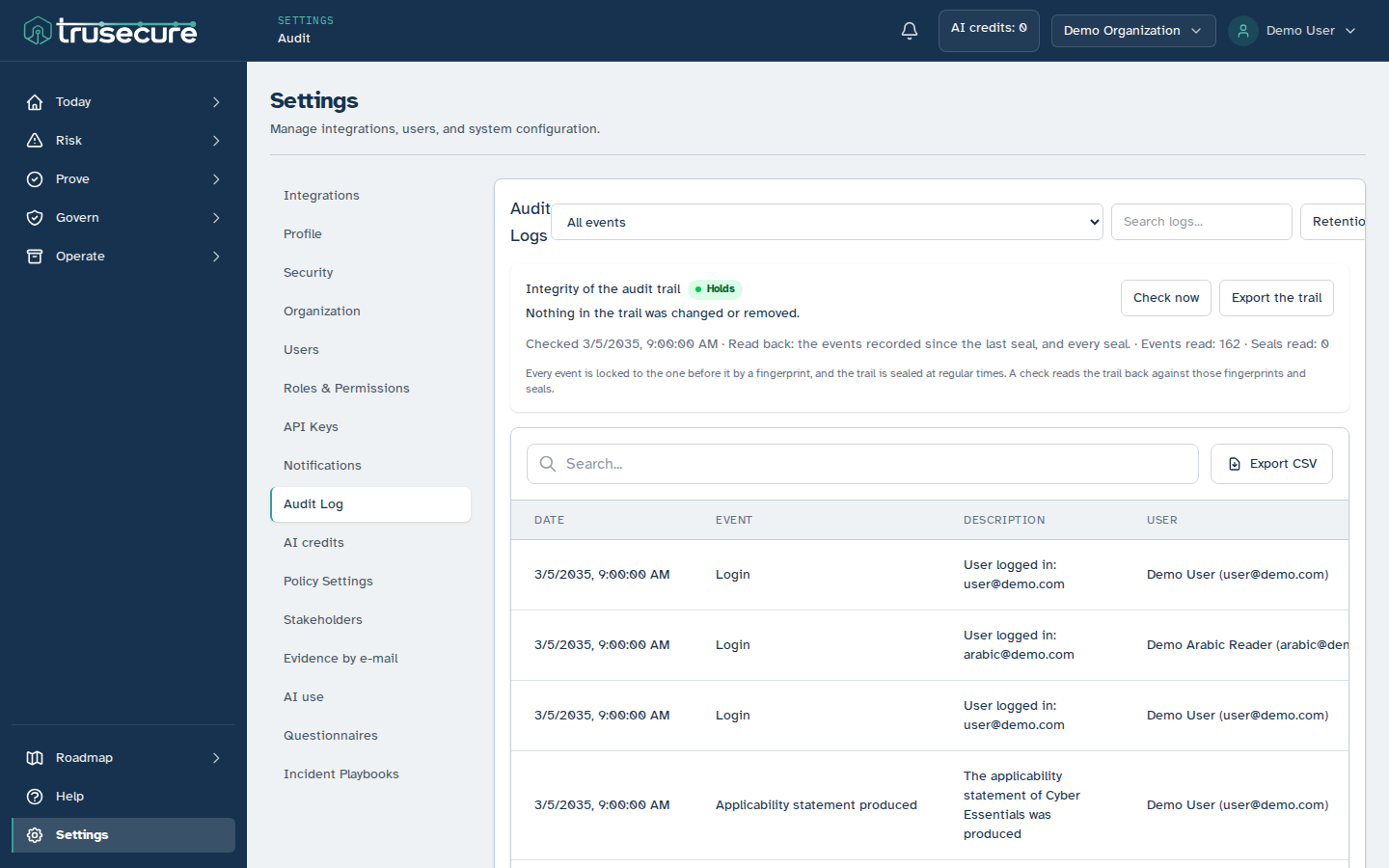
When a call is refused, it is written on the trail of your organisation, naming the kind and the feature.
What you get
The questions a careful buyer asks about AI
TruSecure answers them from the product, and each answer opens the record behind it.
See the platform- What is the model allowed to do, and where is that written down?
- What is it never allowed to do?
- Who changed the rule, and can they have changed it by accident?
- What did it send to the model, and what came back?
- What happens when the model cannot be reached?
- What happens when the answer is refused?
- How many calls does a job make before it starts?
- Which prompts has TruSecure read and checked?
The list
The kinds of work on the list
Six a model may be given, and five it never is. The kind of a feature is written into the feature, and no setting can change it.
| Kind of work | What it is | Who does it |
|---|---|---|
| Drafting a text | Writing a first version of a document | A model may, and a person reads it |
| Proposing a candidate | Suggesting which control a document covers | A model may, and a person confirms it |
| Translating a draft | Putting a document into your language | A model may |
| Turning speech into text | Writing down what was said | A model may |
| Reading a text aloud | Turning a document into speech | A model may |
| Turning text into numbers | Measuring how close two pieces of writing are | A model may |
| Deciding the state of a control | Saying whether a control is done | A person, and the rules |
| Deciding whether a requirement applies | Saying which rules touch you | A person, and the rules |
| Deciding a final classification | Laying a finding or a risk in a band | A person, and the rules |
| Calculating a deadline | Working out when something is due | A person, and the rules |
| Calculating a simulation | Working out what would happen if | A person, and the rules |
Start
See the list before you trust the work
Ask to see the register of work given to an AI model, and the record of each call made for your organisation. You can read both before you decide.