Onboarding
Your first week, in ten steps
TruSecure reads the systems you already run, asks you what the machines cannot know, and drafts what it can. You keep every decision. The checklist is ticked by records, not by clicks.
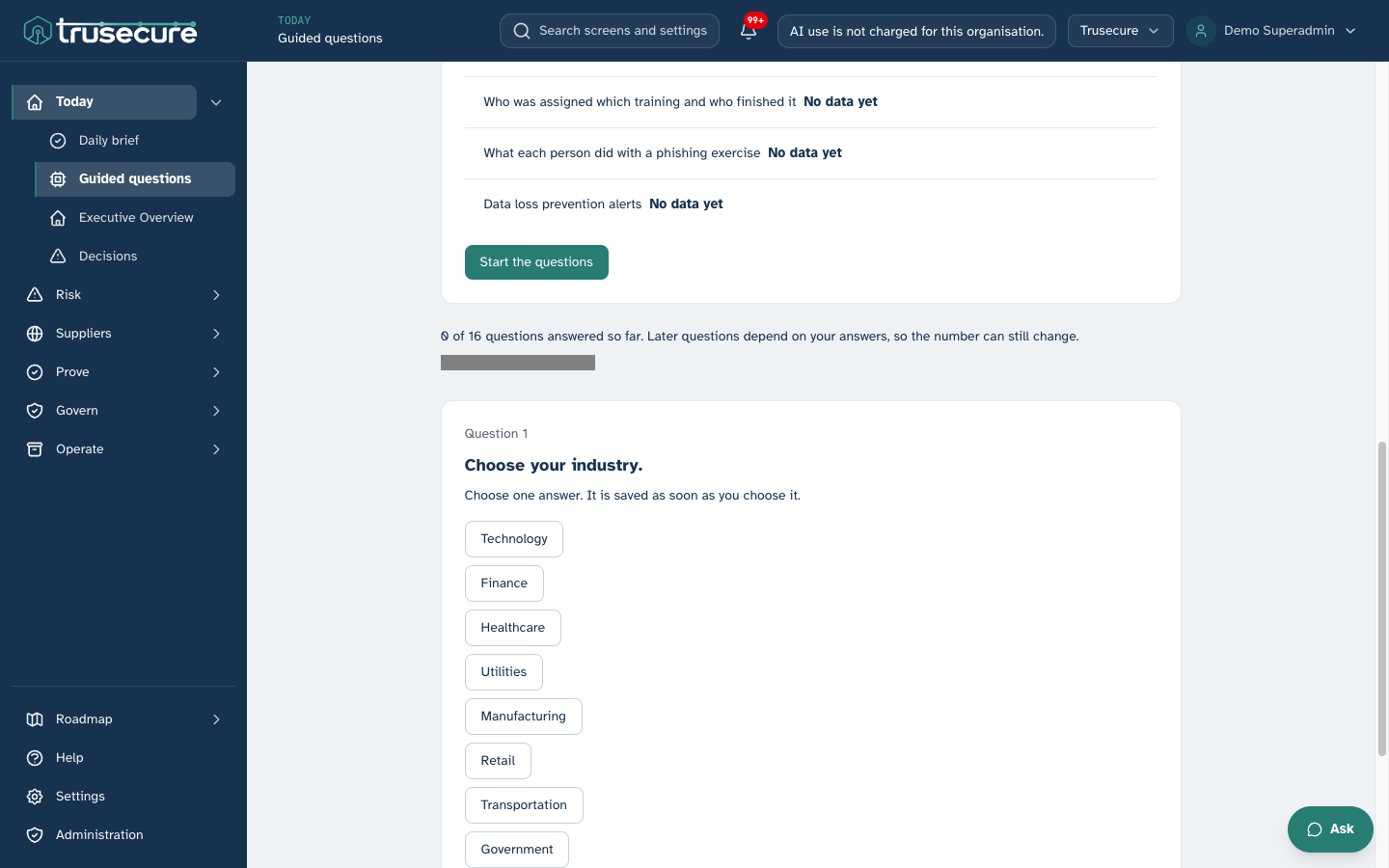
- questions in the setup
18
Your industry, your size, your country and the laws you answer to.
- steps in the first week
10
Each one is ticked by a record, so it cannot be ticked off by hand.
- steps in the risk wizard
5
Plain questions, and the same scoring engine as the register.
Day one
The setup was a folder and a spreadsheet
Somebody decided which frameworks you answer to, copied a checklist into a document, and left it. Every part of it is somewhere else, and none of it is checked.
- The frameworks are in a mail, and the controls are in a workbook.
- The risks are in a document nobody opened this year.
- The policies are in a folder, and the evidence is in somebody's inbox.
- Nobody can say which of it is finished.
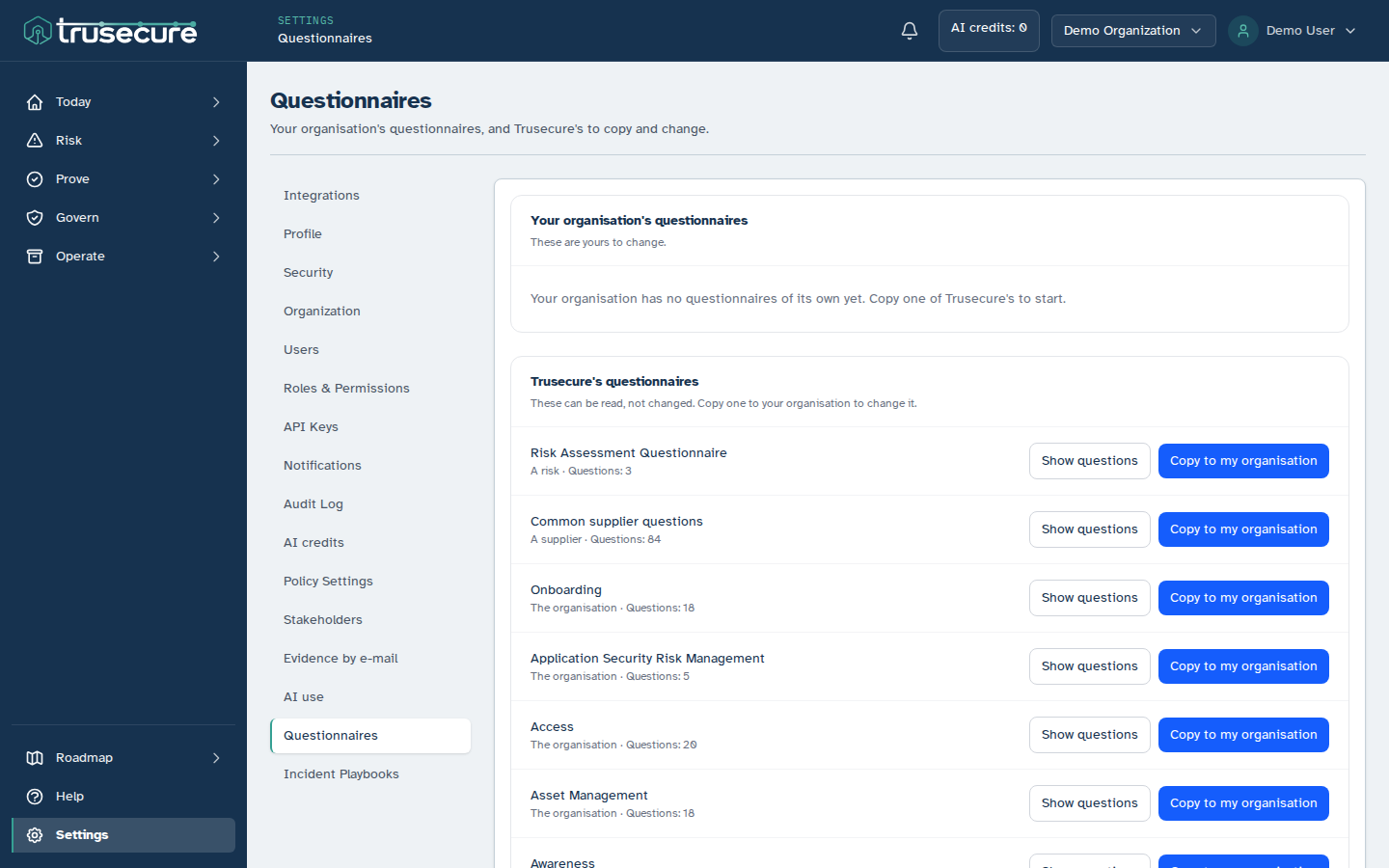
What happens first
Three things you can use on the first day
Each one is something you can show somebody, not a task to come back to.
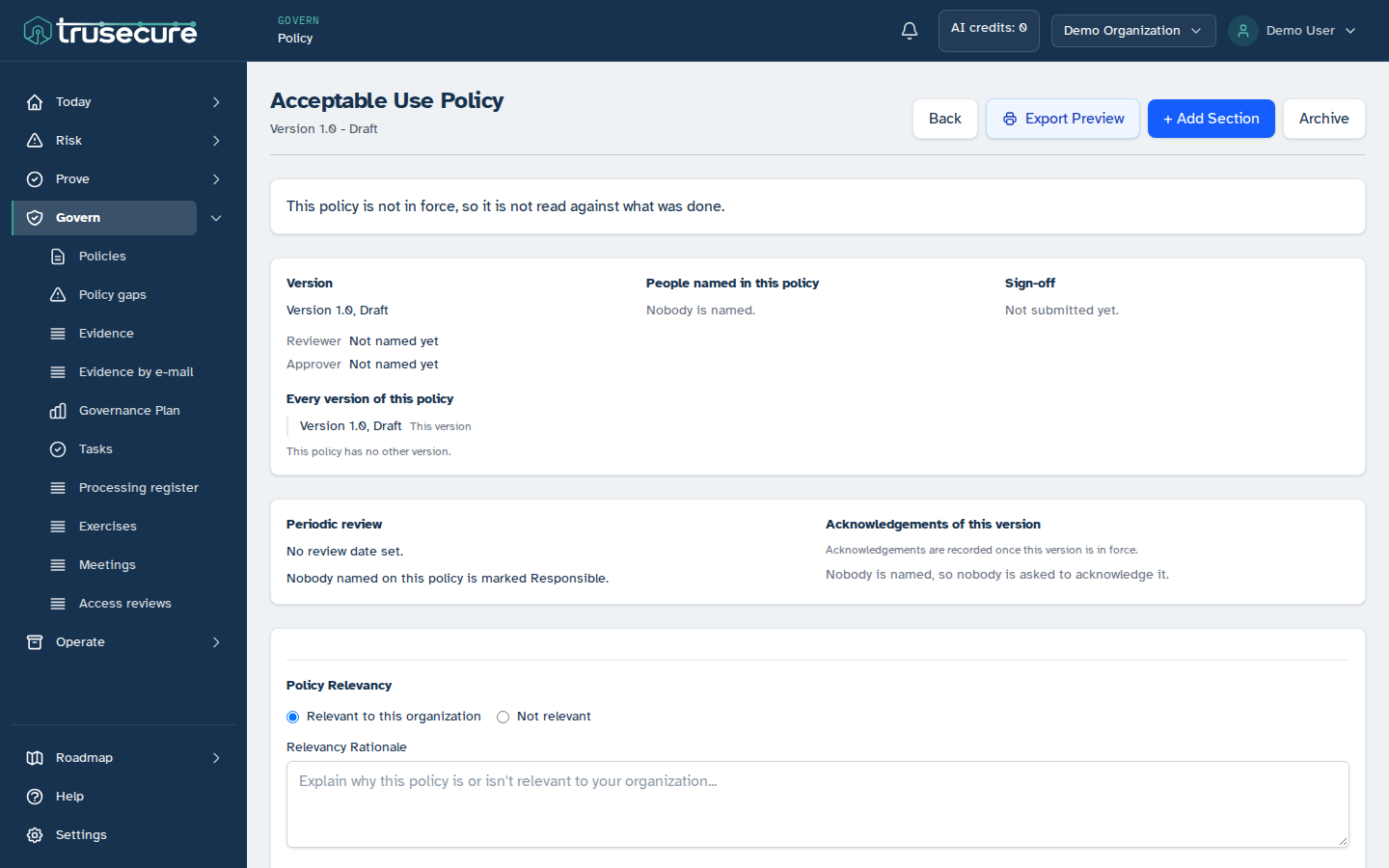
Your first policies, drafted
Read from your sector, your stakeholders, your answers and the controls your frameworks require. They arrive as drafts with nobody named to sign them.
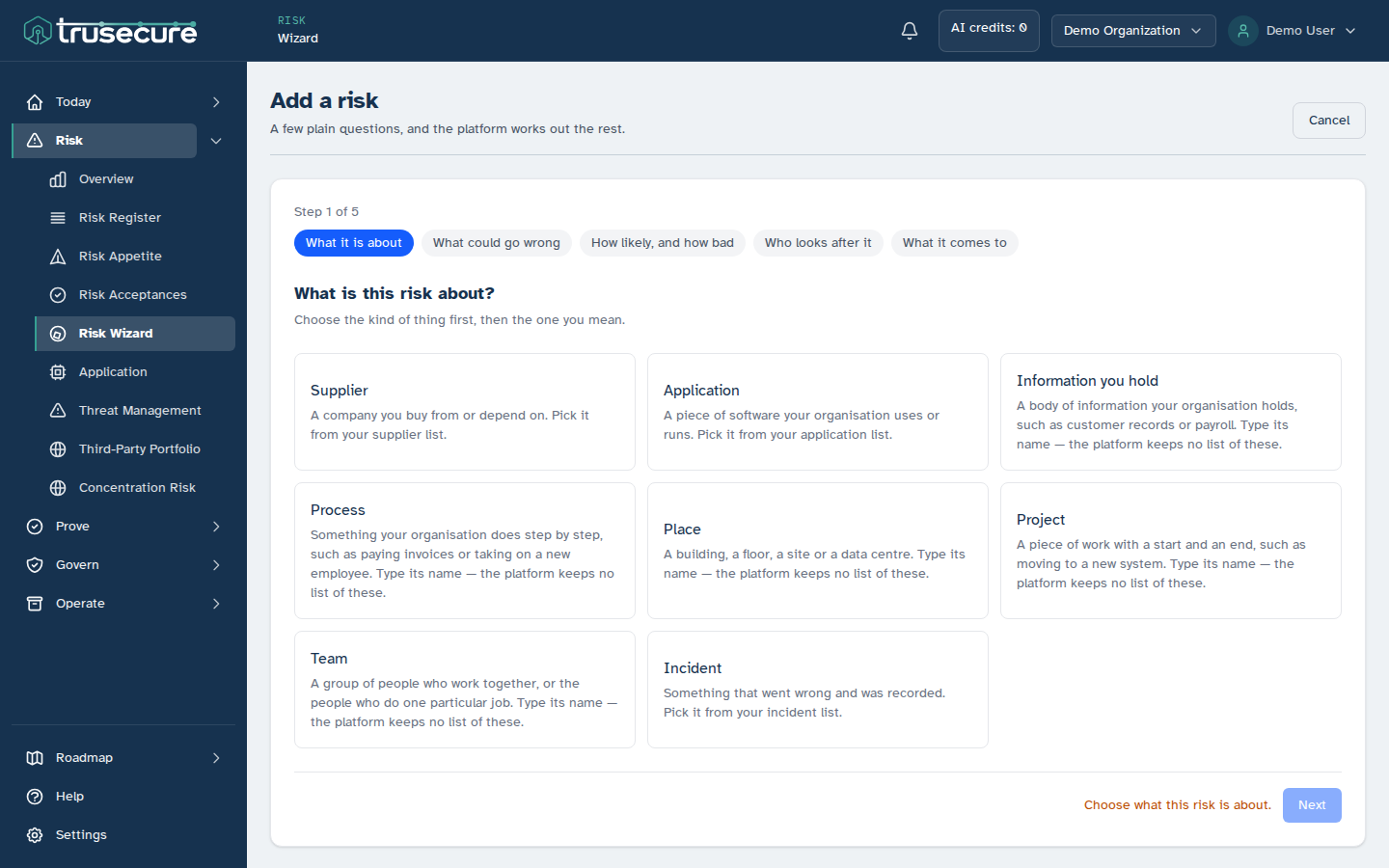
Your first risks, written for you
Five steps of plain questions, scored by the same engine as every risk in the register.
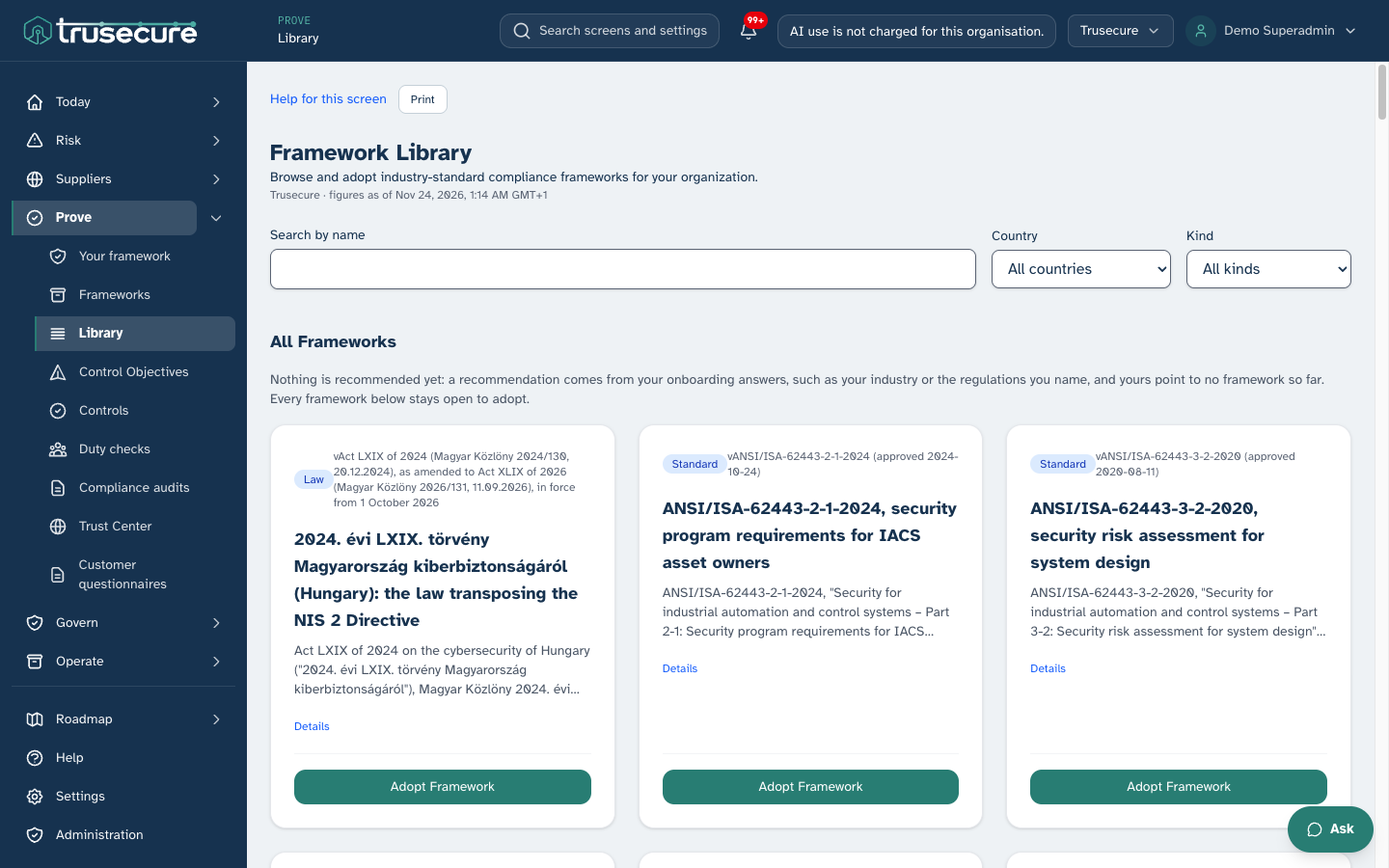
Your own framework, beside the library
One you write yourself sits with the ones you adopt. A control evidenced once answers to both.
On the screen
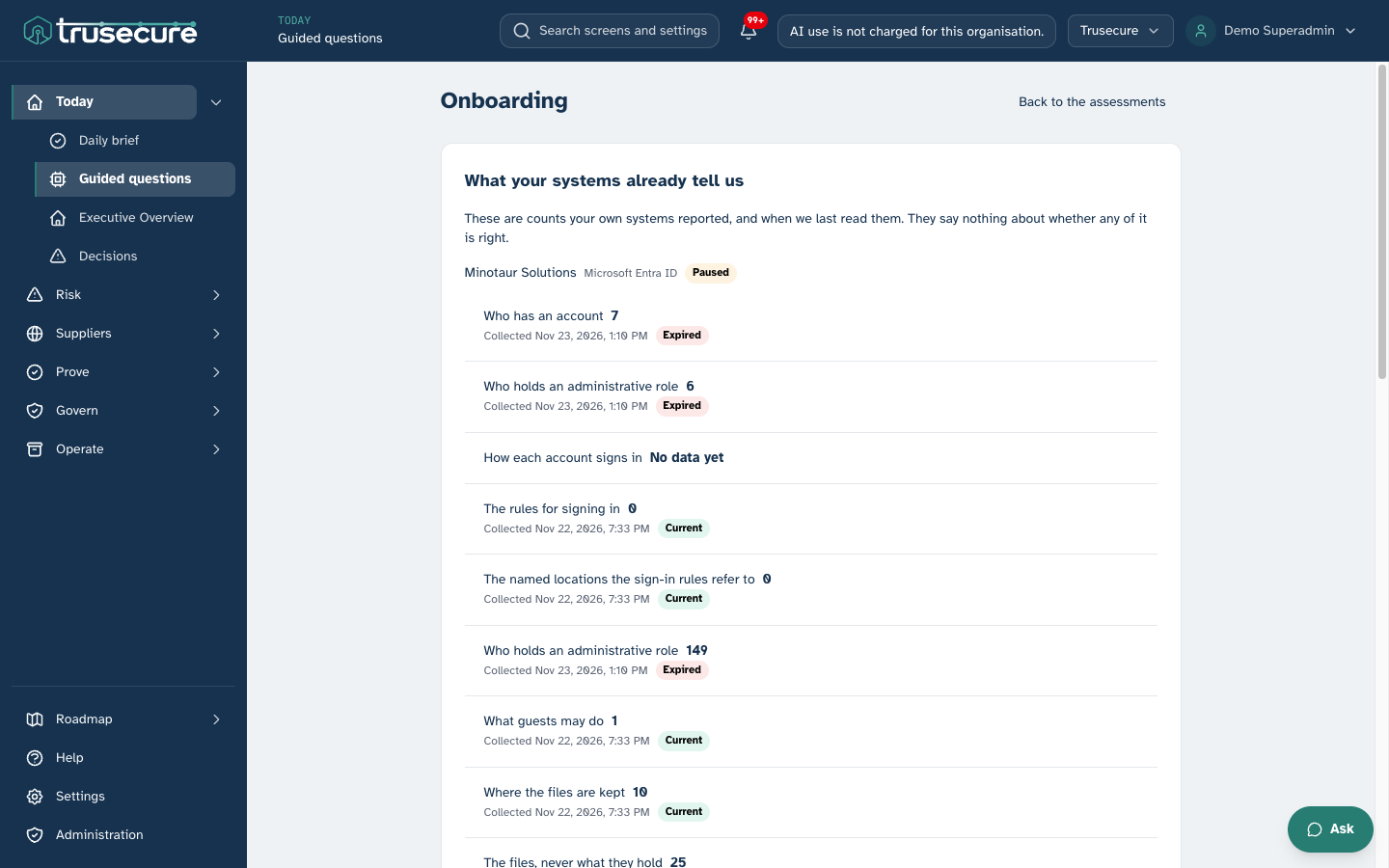
What your systems already tell us
Before you answer a single question, TruSecure shows what each connection already holds. For every stream it names the number of records the source still returns, when that stream was last read, and how fresh it is. A stream that has never been read says so. It never says zero.
The rest of the first week
Ten steps, and what each one leaves you with
The steps are not a list somebody ticks. Each one closes when the record behind it exists, so the count on your page is true.
See the platform- Connect a system. The first read takes everything, and later reads take only what changed.
- Finish the questions. Your industry, your size and your country, and the frameworks that follow from them.
- Adopt a framework. The controls it asks for, with the objectives they sit under.
- Add a colleague. A person who can be named on policies, risks and tasks.
- Approve a policy. Two names against it, and the version history under it.
- Record your legal entity. The entity your evidence, risks and registers are held against.
- Assess a risk. Scored and put in the register, with its owner.
- Collect evidence. An item attached to the control it answers.
- Read your daily brief. The list of what needs you, worked out from the records above.
- Choose your languages. The product in the language your people read.
Questions
What a careful buyer asks
- Does it block us while we set up?
- No. Nothing is covered and no screen is refused while the questions are open.
- What if we answer them wrong?
- The answers are records, and you can change them. The framework that was recommended to you changes with them.
- Can we bring our own framework?
- Yes. You write it, with a name, a description, a type and a version. It is adopted at once and it says who wrote it.
- Does our own framework count as checked?
- No. It says it was written by your organisation. Only the publisher's own frameworks carry a source.
Start
Start with one system and one framework
Tell us which laws you answer to and which system you run first. We set the clocks and the questions up with you, and the first piece of work is on your page from the first day.