Assets and vulnerabilities
What you own that matters, and what is weak in it
TruSecure keeps one register of your assets. Every row carries an owner, and a criticality worked out from how the asset is used. What is weak in them is recorded against the asset it sits on.
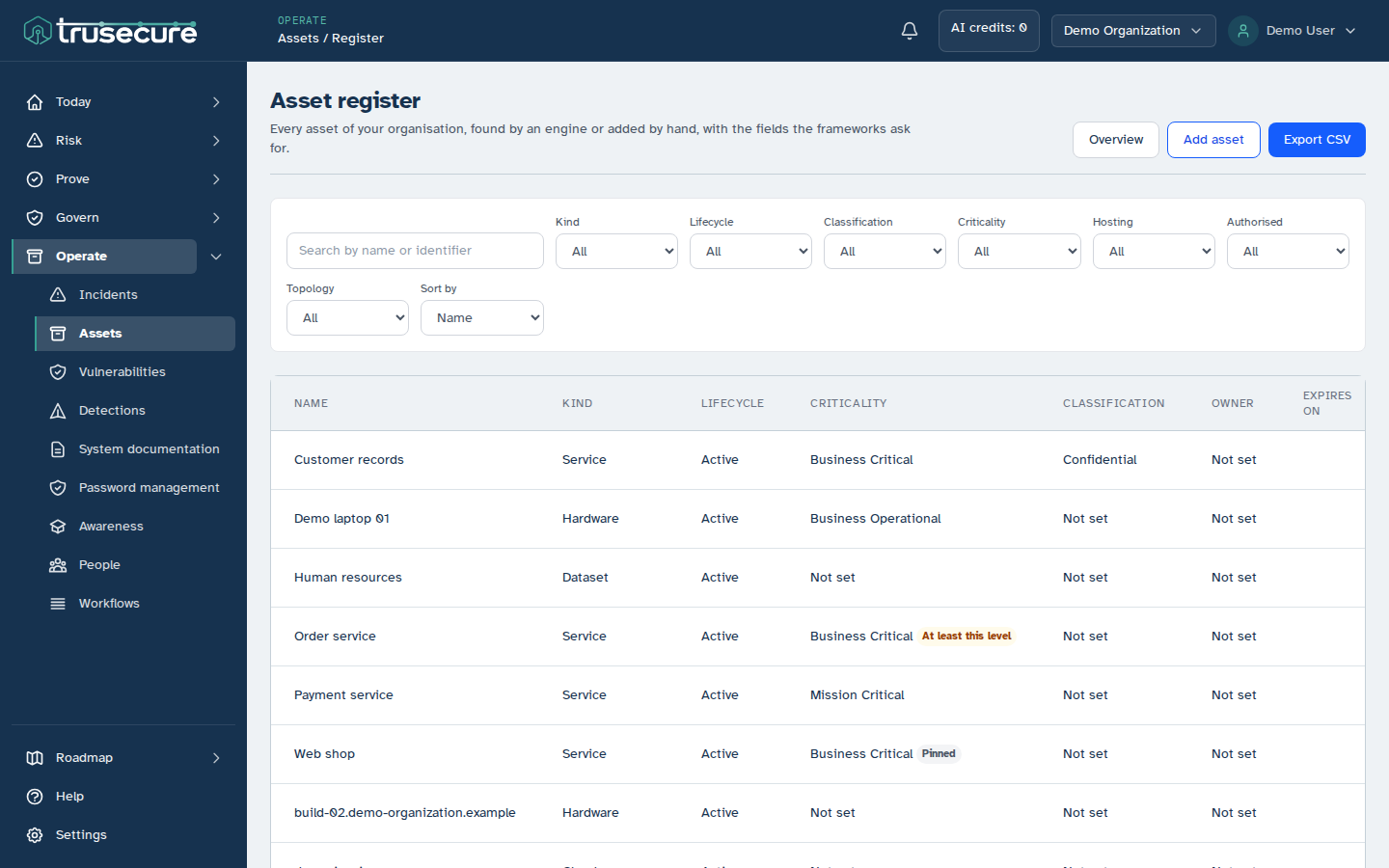
- kinds of asset
8
Machine, software, cloud resource, dataset, network device, virtual machine, image and service.
- levels of criticality
4
Mission Critical, Business Critical, Business Operational and Administrative.
- owner against every row
1
A machine, a dataset or a service, and the person who looks after it.
Your week
The inventory is two years old and the laptop is missing
You know roughly what you run. The list does not say who owns it. It does not say whether it is allowed, or how much of the business leans on it.
- The spreadsheet has no owner column, so nobody is accountable.
- You find out a scanner found something on a machine you no longer have.
- You cannot say which datasets hold personal data.
What TruSecure does
The register fills itself where it can
Anything a tool finds becomes an asset, with the first sighting kept and the row updated afterwards.
One row per asset
What kind of thing it is, who owns it, how it is classified, how critical it is and when it is reviewed again.
Criticality is worked out
Services are scored from their use, so the level follows the work instead of a guess.
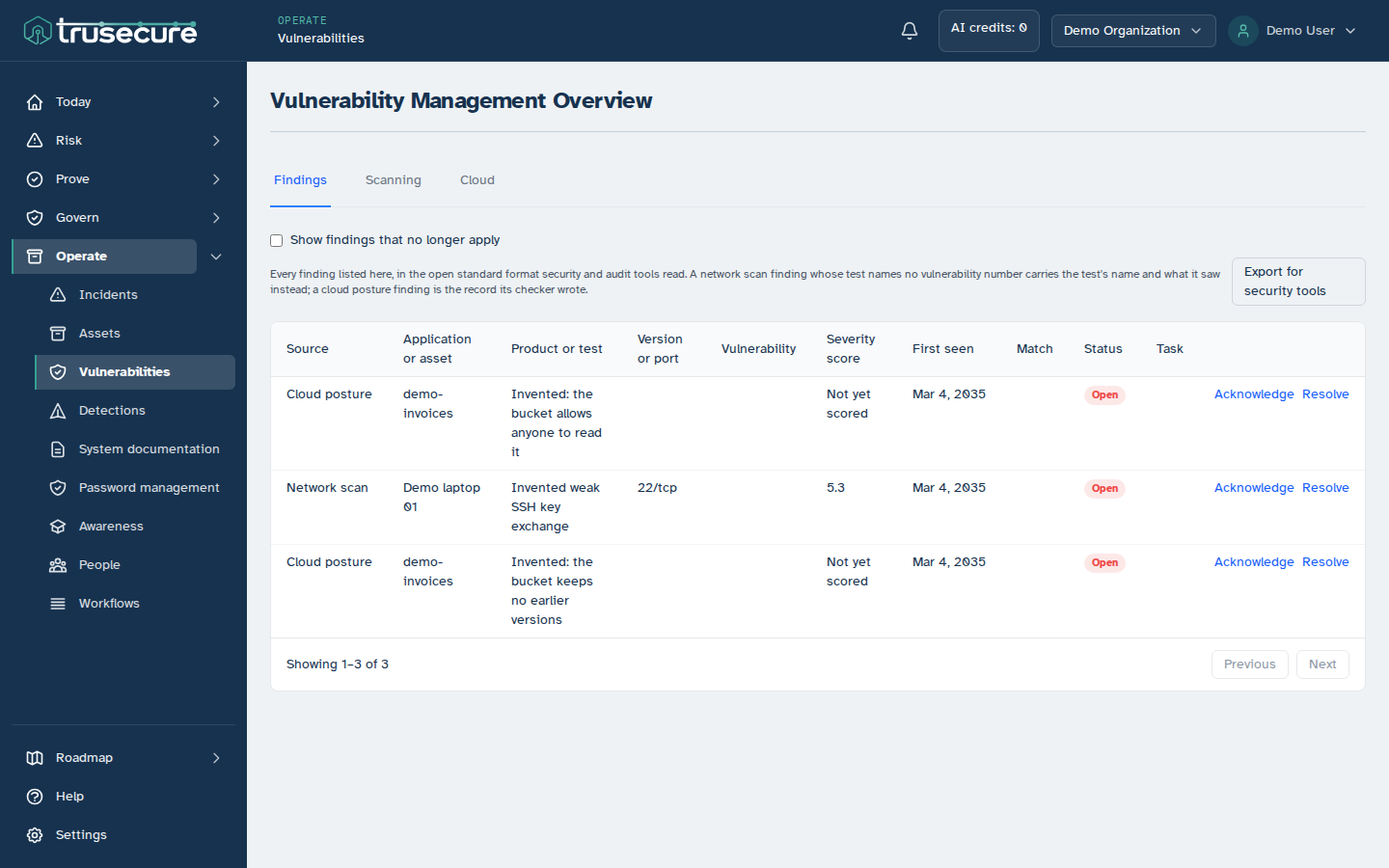
Findings land on the asset
A vulnerability is recorded against the application it affects, not against a spreadsheet.
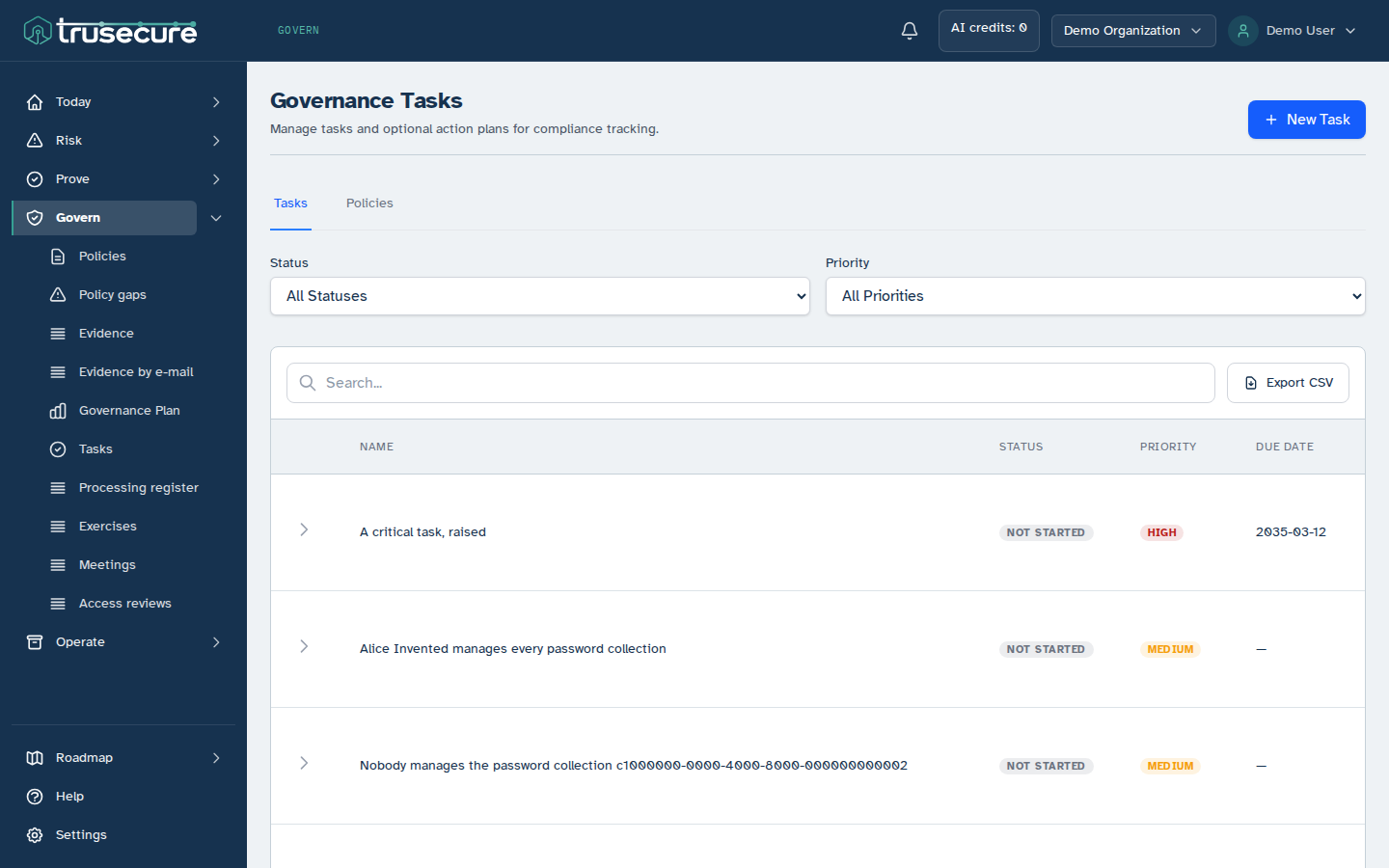
The gaps are raised
When a policy relies on something that is not in place, a gap is opened for the people who own it.
What it finds
Three things that arrive on their own
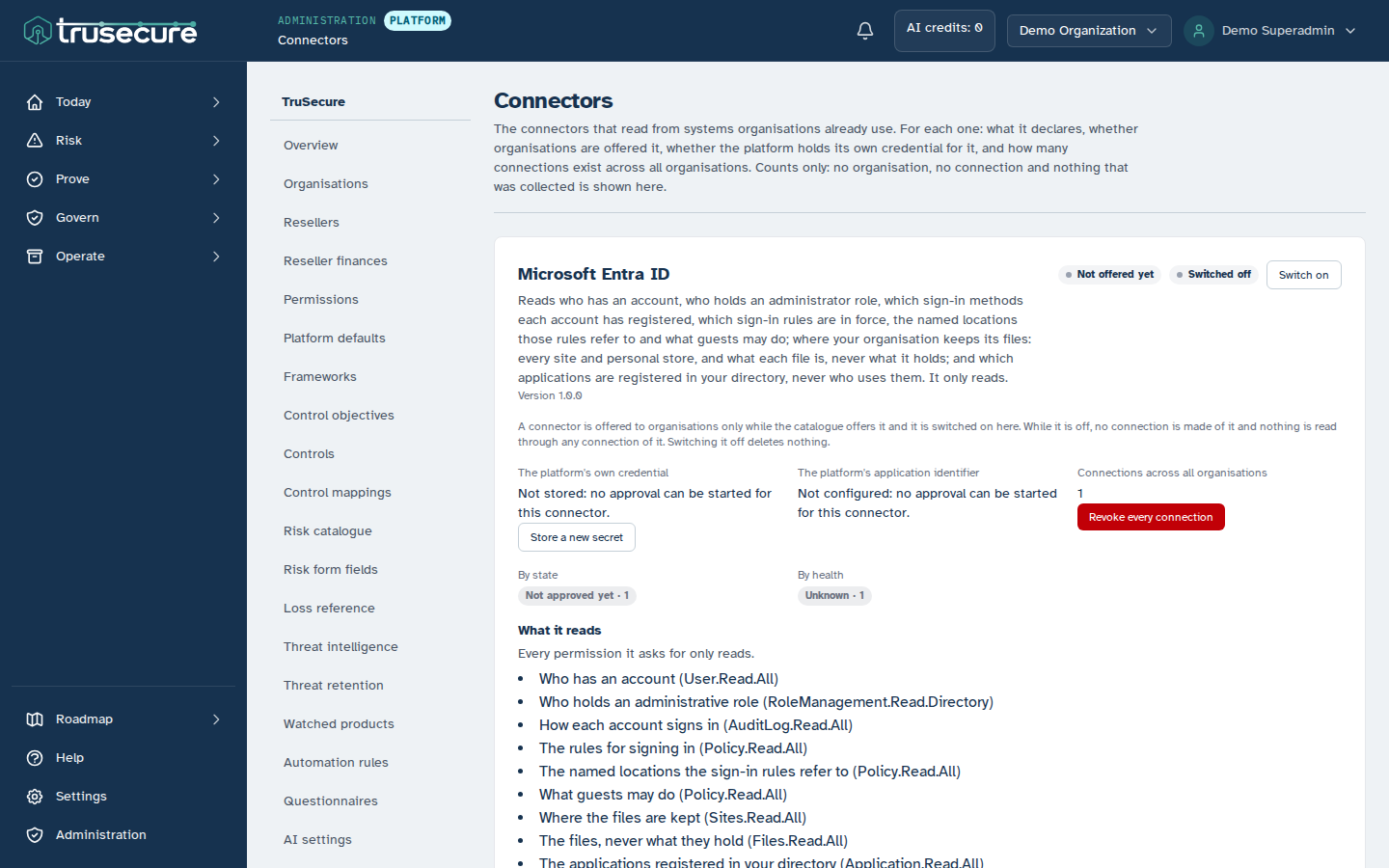
You do not type these in. They come from the systems you have already connected.
Everything you run
Machines, applications, cloud resources, datasets, network devices, container images and services.
The data you hold
Every place you keep files becomes a dataset, and each one is scanned for personal data.
What is weak in them
Scans, cloud checks and the catalogue of known weaknesses, all against the asset.
What you get
The questions you are asked about your estate
TruSecure answers them from the register, and each answer opens the record behind it.
See the platform- What do we run, and who owns each piece of it?
- Which of it is allowed to be here?
- Which of it holds personal data?
- Which service would stop the business if it went?
- Which findings are still open, and on what?
- Which assets have not been looked at since last year?
- What has not been seen for a while, and is it still ours?
- Which asset has no owner at all?
- Which of your systems hold data you did not know was there?
Criticality
The four levels, worked out from use
A service nobody reported anything about is never read as mattering little. It is scored on what is known and marked as a floor.
| Level | What it means | What follows |
|---|---|---|
| Mission Critical | The work that depends on it stops without it | Everything else follows from this |
| Business Critical | A core function of yours depends on it | You watch it more closely |
| Business Operational | It matters, but the work carries on | You record it and watch it |
| Administrative | Nothing would stop if it went | You record it like the rest |
Start
Connect one scanner, and see what you own
TruSecure reads the systems you already run and fills the register from what it finds. You get the inventory, the owners and the first list of gaps.